

SANS

July 2012

Educational Foundations
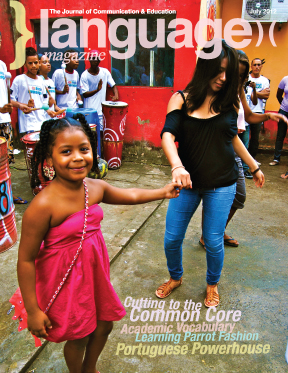
July 2012 Cover

For the first time, the Department of Education has reported that the number of homeless students in America has topped a million while another new report estimates that 23% of children in the U.S. live in “relative poverty.” Unsurprisingly, these figures contain disproportionate numbers of minority and English Language Learner (ELL) students. Yet, our teachers and school administrators are constantly being accused of failing our children.

One million, sixty-five thousand, seven hundred ninety-four homeless students were reported enrolled in schools during 2010-11, a 13% increase from 2009-10. Almost 122,000 (14%) of them are identified as ELLs but the figure does not include homeless infants, children not enrolled in school, and homeless students that schools simply failed to identify. These children live on the streets, in shelters, motels, and with relatives.

Despite recent attempts at closing the achievement gap between low-income students and their peers, this increase in homelessness can only stifle such efforts. According to the new report, only 52% of the homeless students who took standardized tests were deemed to be proficient in reading, and only 51% passed math tests.

The latest edition of the United Nations Children’s Fund’s (UNICEF’s) report on child poverty in developed countries found that about 12 million kids in the U.S. live in relative poverty which gives the country second place on the “relative child poverty” table — above Latvia, Bulgaria, Spain, Greece, and 29 others. Only Romania ranks higher. Recent U.S. Census Bureau statistics confirm these figures, estimating the percentage of American children living in poverty at 21.6%, while the figure for Hispanic children soars to nearly one in three, and a staggering 38.2% for African-American children.
Tourists making their way to the Washington Monument last month may have come across 857 neatly arranged student desks – organized by The College Board’s “Don’t Forget Ed!” campaign to symbolize the number of American students who drop out of school every hour of every school day. According to Education Department figures, 34% of Hispanic students and 36% of Black students drop out.

Both President Obama and Mitt Romney often mention the importance of education, usually in the context of improving the country’s economy and creating jobs, or of making college more affordable, yet little mention is made of the underlying societal problems which prevent schools from succeeding. And, despite claims to the contrary, these problems can be fixed — as demonstrated by the fact that Canada and the U.S. have the same relative child poverty rate – about 25% but, after government taxes, benefits and other social programs, Canada’s child poverty rate drops to 13%, while America’s remains above 23%.

The introduction to the UNICEF report eloquently warns that “failure to protect children from poverty is one of the most costly mistakes a society can make. The heaviest cost of all is borne by the children themselves. But their nations must also pay a very significant price – in reduced skills and productivity, in lower levels of health and educational achievement, in increased likelihood of unemployment and welfare dependence, in the higher costs of judicial and social protection systems, and in the loss of social cohesion.

“Because children have only one opportunity to develop normally in mind and body, the commitment to protection from poverty must be upheld in good times and in bad. A society that fails to maintain that commitment, even in difficult economic times, is a society that is failing its most vulnerable citizens and storing up intractable social and economic problems for the years immediately ahead.

Until we tackle childhood poverty, blaming educators for our apparent inability to compete on international student assessments is wholly unjust.

.

IN THIS ISSUE:

Cutting to the Common Core
Lori Helman shares her thoughts on the Common Core State Standards (CCSS) and the teaching of English Language Learners (ELLs)

Accelerating Academic Vocabulary
Yu Ren Dong reveals strategies for teaching academic vocabulary to ELLs in the Common Core era

Stressful Speech
Viviane Gontijo studies the effect of lowering anxiety levels on oral language production

How is Cosmo Acquiring English?
Stephen Krashen turns to a parrot to prove the importance of the affective filter

The Portuguese Leviathan
Kristal Bivona explores the diversity of Brazil

Immersed in the Bluegrass State
Rebbecca Kaplan explains why Georgetown College’s Spanish program has drawn national attention

Last Writes Richard Lederer and the Nerd Words

Peace Corps

Online Magazine

State Dept

Quick Links

The World As We Speak

Texas Introduces House Bill to adopt Seal of Bilingualism and Biliteracy
If approved, seal could appear on diplomas as early as the 2013-2014 school year

Brazilian Literature Goes Global
Reading Brazil Digitally and in Translation.

NY Becomes 2nd State to Recognize Biliterate Grads

Feds Face Foreign Language Crisis
Senate hearing discussed how the lack of adequately trained language specialists compromises national security.

State Dept Chooses Kindle for Worldwide English
In an effort to promote English literacy around the world, the U.S. Department of State is planning to purchase up to 35,000 Kindle e-readers as well as selected content. The Kindles would be distributed to U.S.-friendly educational centers around the world so as to be available to those looking to study English and learn about America.

Need for Bilingual Preschools
A new report from the Center for American Progress that urges policymakers to maximize on the investments being made in public preschool programs to serve disadvantaged children. Specifically, the report calls for "more federal, state, and local capacity to meet the increasing demand for culturally and linguistically appropriate services for children who are dual-language learners."

Tensions in Kyrgyzstan over Exams in Uzbek
Nationalists protest the availability of university entrance exams in the Uzbek language.

Linguistic Diversity Linked to Biodiversity
Linguistic and cultural preservation may be the key to protecting biodiversity.

English Proficiency Biggest Hurdle for Brazilian Scholars
At a time when Brazilians have more resources and opportunities to study abroad than ever, lacking language skills a hinderance.

Cajoling All Teachers to Consider ELLs
New report examines how to prepare teachers for the fastest growing student population in the U.S.

Language Education Cuts Compromise National Security
New Council on Foreign Relations report calls education a national security issue

Canada Instates Language Tests for Some Immigrants
Exams on proficiency in either English or French will be stated for certain immigrants in June

San Jose School Hosts Spanish Spelling Bee
First Spanish spelling bee in northern California held at a dual language academy

English is Number One Language Test in Georgia
Students in final year of school aim to take English instead of Russian in foreign language exam

Promotion of French Language is Hot Topic
The separatist opposition party in Quebec rallys for French

U.S. Demand for Portuguese Increasing
Universities scramble to keep up with influx of learners

Urdu Gets Official Status Around India
Urdu to become a language of instruction in Muslim communities

Norwegian Language Camp to be Launched
Camp will focus on Norwegian language and cultural immersion activities

National Center for Family Literacy Ruminates on Education Policy at Conference
Conference of educators, advocates, and policy makers highlights family literacy

New Arabic Center Symbolizes Chinese-Emirati Exchange
Beijing's University of Foreign Studies unveils remodeled center for Arabic language and Islamic studies.

Promoting French in Pakistan
After an exodus of native French teachers, France pushes its language and culture in Pakistan.

Columbia’s Teacher College Addresses International Education with TEDx
Inaugural TEDx conference on international education takes places

Irish Language on the Rise, but not in Ireland
Could heritage learners abroad save Irish?

Santorum: Puerto Ricans Should Learn English
While visiting Puerto Rico, Santorum turns off Boricua voters.

International Summit on Teaching Profession Takes Place in New York
Delegations from 23 countries and regions discuss education issues at the second annual summit

Journey to Find Indigenous Languages in Trip of the Tongue
New book by Elizabeth Little covers indigenous languages throughout the United States


International Portuguese educators come together to teach Timorese teachers

Read Across America Kicks Off March 2
Students all over the U.S. will celebrate literacy on Dr. Seuss's birthday

Equatorial Guinea Strengthens Connection to Portuguese
Portuguese linguists to document archaic dialect from the Annobón province.

To read from The World As We Speak Archive, click here.

Join our forum!

Find Your University

USAEducationGuides.com is a fully interactive College Search Tool that provides you with a wealth of information about 5,044 two- and four-year colleges and universities in the United States. The search includes statistics, photos, online applications, and firsthand information written by current students just like you. You can search by region, state, major, and school type to find the college of your choice.
Banner Campaign