SANS

April 2012

Writing Off Reading

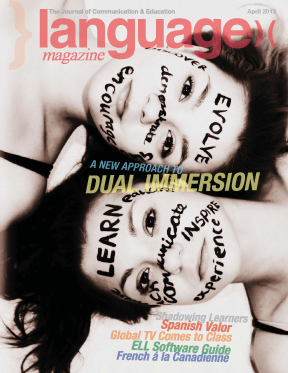
April 2012 Cover

A new report from the World Literacy Foundation estimates that illiteracy costs the world $1.2 trillion a year, and the social and economic impact of illiteracy on the U.S. alone is over $300 billion a year.

The report shows that more than 800 million people across the world lack the basic reading and writing skills needed to accomplish simple tasks, such as reading a medicine label or filling out a job application, costing the global economy more than $1.19 trillion a year.

While these figures are hard to verify, the message is clear: it is impossible to receive education adequate for our information society without first becoming literate.

Just last month, the U.S. Secretary of Education, Arne Duncan, lamented “that the U.S. has a great deal to learn from countries that are out-educating us” during his opening remarks at the International Summit on the Teaching Profession in New York. This idea of an international educational competition has become very popular amongst politicians recently, but it is fundamentally flawed. Fair and healthy competition is based on the principle that everyone starts from the same place. Unfortunately, differing degrees of poverty create an uneven playing field. According to a 2007 UNICEF report on childhood poverty in developed nations, the U.S. scored in the bottom third of the rankings for five of the six dimensions reviewed (material well-being, health and safety, peer and family relationships, behaviors and risks, and young people’s own subjective sense of well-being), and in the middle third for the one remaining dimension — education. Out of 21 countries analyzed, the U.S. came 20th overall, but 12th in education. Yet, we consistently argue that it is our public schools that are failing, and ignore the other factors.

Most of us would expect the U.S. as the world’s most powerful economy to score better than 12th in educational rankings. However, according to most statistical reports, about 25 percent of our children are living in poverty, which puts us on a par with Bulgaria and Mexico rather than economically advanced nations such as Denmark, Australia, Luxembourg, and Norway.
Fittingly, these advanced nations with low childhood poverty and high literacy rates also sport far higher per capita income than the U.S. figure of $48,000: Denmark produces $63,000 per capita, Australia $67,000, Luxembourg $122,000, and Norway $97,000 per capita.

Secretary Duncan continued his address by stressing the importance of effective and adequately prepared teachers. Giving teachers the training and respect they deserve is most welcome, but it suggests again that teacher quality is the flaw in the education system, and that once it is “fixed,” the U.S. will shoot up international rankings of student achievement.
If only it were so simple. Even the most brilliant, well-paid, respected teachers with complete job security cannot be expected to overcome such high rates of poverty on their own.

However, improving teaching conditions along with other programs such as increasing access to libraries and ensuring that children are well-nourished can improve literacy levels and thus overall educational achievement.

Instead of cutting library funding (see News, page 10), social programs, and early reading initiatives while blaming schools and teachers for “unsatisfactory” educational results, we must look deeper into solving the social and economic inequities of our country by making strategic investments to overcome the cycle of poverty and illiteracy.

IN THIS ISSUE:

2012 ELL Software Guide
Technology has revolutionized the way that languages are taught and practiced
Tying Cable to Realia
Melissa Conroy and Amy Ferryman explain how SCOLA is working with local cable TV providers to offer low cost international programming for the classroom
A Day in the Life of a Learner
Ivannia Soto reveals how shadowing learners enables educators to monitor their use of academic language
The New Rationale for Dual Immersion
James Crawford and Sharon Adelman Reyes believe that the key to active learning is the approach to curriculum
Pour Toujours, le Canadien!
Kristal Bivona charts the ongoing demand for French Canadian and suggests where it can be sated
Spanish Valor
With prices dropping, Daniel Ward can’t find any reasons to put off a study trip to Spain
Reviews Kara Hunter gives us some historical pronouncements
Last Writes Richard Lederer is on a teachers list

Peace Corps

Online Magazine

State Dept

Quick Links

The World As We Speak

Texas Introduces House Bill to adopt Seal of Bilingualism and Biliteracy
If approved, seal could appear on diplomas as early as the 2013-2014 school year

Brazilian Literature Goes Global
Reading Brazil Digitally and in Translation.

NY Becomes 2nd State to Recognize Biliterate Grads

Feds Face Foreign Language Crisis
Senate hearing discussed how the lack of adequately trained language specialists compromises national security.

State Dept Chooses Kindle for Worldwide English
In an effort to promote English literacy around the world, the U.S. Department of State is planning to purchase up to 35,000 Kindle e-readers as well as selected content. The Kindles would be distributed to U.S.-friendly educational centers around the world so as to be available to those looking to study English and learn about America.

Need for Bilingual Preschools
A new report from the Center for American Progress that urges policymakers to maximize on the investments being made in public preschool programs to serve disadvantaged children. Specifically, the report calls for "more federal, state, and local capacity to meet the increasing demand for culturally and linguistically appropriate services for children who are dual-language learners."

Tensions in Kyrgyzstan over Exams in Uzbek
Nationalists protest the availability of university entrance exams in the Uzbek language.

Linguistic Diversity Linked to Biodiversity
Linguistic and cultural preservation may be the key to protecting biodiversity.

English Proficiency Biggest Hurdle for Brazilian Scholars
At a time when Brazilians have more resources and opportunities to study abroad than ever, lacking language skills a hinderance.

Cajoling All Teachers to Consider ELLs
New report examines how to prepare teachers for the fastest growing student population in the U.S.

Language Education Cuts Compromise National Security
New Council on Foreign Relations report calls education a national security issue

Canada Instates Language Tests for Some Immigrants
Exams on proficiency in either English or French will be stated for certain immigrants in June

San Jose School Hosts Spanish Spelling Bee
First Spanish spelling bee in northern California held at a dual language academy

English is Number One Language Test in Georgia
Students in final year of school aim to take English instead of Russian in foreign language exam

Promotion of French Language is Hot Topic
The separatist opposition party in Quebec rallys for French

U.S. Demand for Portuguese Increasing
Universities scramble to keep up with influx of learners

Urdu Gets Official Status Around India
Urdu to become a language of instruction in Muslim communities

Norwegian Language Camp to be Launched
Camp will focus on Norwegian language and cultural immersion activities

National Center for Family Literacy Ruminates on Education Policy at Conference
Conference of educators, advocates, and policy makers highlights family literacy

New Arabic Center Symbolizes Chinese-Emirati Exchange
Beijing's University of Foreign Studies unveils remodeled center for Arabic language and Islamic studies.

Promoting French in Pakistan
After an exodus of native French teachers, France pushes its language and culture in Pakistan.

Columbia’s Teacher College Addresses International Education with TEDx
Inaugural TEDx conference on international education takes places

Irish Language on the Rise, but not in Ireland
Could heritage learners abroad save Irish?

Santorum: Puerto Ricans Should Learn English
While visiting Puerto Rico, Santorum turns off Boricua voters.

International Summit on Teaching Profession Takes Place in New York
Delegations from 23 countries and regions discuss education issues at the second annual summit

Journey to Find Indigenous Languages in Trip of the Tongue
New book by Elizabeth Little covers indigenous languages throughout the United States


International Portuguese educators come together to teach Timorese teachers

Read Across America Kicks Off March 2
Students all over the U.S. will celebrate literacy on Dr. Seuss's birthday

Equatorial Guinea Strengthens Connection to Portuguese
Portuguese linguists to document archaic dialect from the Annobón province.

To read from The World As We Speak Archive, click here.

Join our forum!

Find Your University

USAEducationGuides.com is a fully interactive College Search Tool that provides you with a wealth of information about 5,044 two- and four-year colleges and universities in the United States. The search includes statistics, photos, online applications, and firsthand information written by current students just like you. You can search by region, state, major, and school type to find the college of your choice.
Banner Campaign