SANS

August 2006

Testing Without Tears
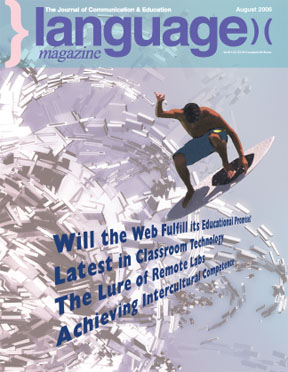
August 2006 Cover

Over the last month, doping scandals have sent the sports of cycling and sprinting into turmoil, while baseball’s biggest hitter, Barry Bonds, continues to defend himself in Court against doping allegations.

Justin Gatlin, the 2004 Olympic gold medalist who earlier this year tied the world 100-meter record, acknowledged that he failed a test for testosterone. His disclosure came two days after the sports world was rocked by the announcement of an initial irregular test result involving Tour de France champion Floyd Landis, who has denied misconduct.

Simultaneous scandals involving two of sports’ most prestigious figures — the Tour de France champion and the world’s fastest man — raise the question of whether sports can ever be clean when the stakes are so high.

Doping-related challenges remain persistent and far more extensive than many casual fans might want to believe in any number of professional and Olympic sports, including Major League Baseball, cycling, and track and field. Athletes bent on manipulation have criminal doctors and biochemists working with them — and international networks provide athletes with anything that the pharmaceutical industry has to offer and at levels just under the permissible values.

“Anybody with an IQ over room temperature should have been able to figure this out, that doping is pervasive across all sports,” former Penn State professor Charles Yesalis, one of the nation’s leading anti-doping experts, recently told the Los Angeles Times.

Has it always been this way? Or is it a consequence of such great rewards for success? I believe that when the stakes are so high, normally rational people will go to extreme, and often unethical, lengths to succeed.
The punishments for failure mandated by the No Child Left Behind Act have put educators in the position where they literally cannot afford to allow their schools to fail, and the pressure is greatest on schools with large minority populations which have no access to alternative funding.

States are floundering in their attempts to implement tests (see News, p.9), because they are so concerned about the consequences of negative results. Assessments are essential to monitor student progress, and ascertain what is and is not working. However, when the stakes are so high, the temptation to skew results — teach to the test, etc. — becomes greater, and assessments begin to lose their value.

When the repercussions of insufficient improvement in test scores include funding cuts, job losses, and school closures, you can be sure that results will be manipulated by any means possible to tell the right story, which will mean covering up the results of those children who need the most attention, encouraging them to drop out so they do not show up in the statistics, or just leaving them behind again.

IN THIS ISSUE:

Will the Web Fulfill Its Educational Promise?
Steven Donahue ponders the future of the convergence of technology upon the educational system and personal privacy

Latest in Classroom Technology
Hannah Zeiler and Fiona Nottingham check out the latest offerings for the language classroom

The Lure of Remote Labs
Dr. Richard Laden lays out the reasons for using a Language Lab and extending it by remote access

Achieving Intercultural Competence
Fred Dervin shares his insights into the definition, acquisition and assessment of cultural understanding

Testing Made Simpler
New Pearson Education vice president tells us how and why they integrated Prosper into Shining Star

Teacher Development
Spanish shortcuts and MAs

The World as We Speak
Language Magazine’s forum for world language news

Last Writes
Richard Lederer on flying colors

Peace Corps

Online Magazine

State Dept

Quick Links

The World As We Speak

Texas Introduces House Bill to adopt Seal of Bilingualism and Biliteracy
If approved, seal could appear on diplomas as early as the 2013-2014 school year

Brazilian Literature Goes Global
Reading Brazil Digitally and in Translation.

NY Becomes 2nd State to Recognize Biliterate Grads

Feds Face Foreign Language Crisis
Senate hearing discussed how the lack of adequately trained language specialists compromises national security.

State Dept Chooses Kindle for Worldwide English
In an effort to promote English literacy around the world, the U.S. Department of State is planning to purchase up to 35,000 Kindle e-readers as well as selected content. The Kindles would be distributed to U.S.-friendly educational centers around the world so as to be available to those looking to study English and learn about America.

Need for Bilingual Preschools
A new report from the Center for American Progress that urges policymakers to maximize on the investments being made in public preschool programs to serve disadvantaged children. Specifically, the report calls for "more federal, state, and local capacity to meet the increasing demand for culturally and linguistically appropriate services for children who are dual-language learners."

Tensions in Kyrgyzstan over Exams in Uzbek
Nationalists protest the availability of university entrance exams in the Uzbek language.

Linguistic Diversity Linked to Biodiversity
Linguistic and cultural preservation may be the key to protecting biodiversity.

English Proficiency Biggest Hurdle for Brazilian Scholars
At a time when Brazilians have more resources and opportunities to study abroad than ever, lacking language skills a hinderance.

Cajoling All Teachers to Consider ELLs
New report examines how to prepare teachers for the fastest growing student population in the U.S.

Language Education Cuts Compromise National Security
New Council on Foreign Relations report calls education a national security issue

Canada Instates Language Tests for Some Immigrants
Exams on proficiency in either English or French will be stated for certain immigrants in June

San Jose School Hosts Spanish Spelling Bee
First Spanish spelling bee in northern California held at a dual language academy

English is Number One Language Test in Georgia
Students in final year of school aim to take English instead of Russian in foreign language exam

Promotion of French Language is Hot Topic
The separatist opposition party in Quebec rallys for French

U.S. Demand for Portuguese Increasing
Universities scramble to keep up with influx of learners

Urdu Gets Official Status Around India
Urdu to become a language of instruction in Muslim communities

Norwegian Language Camp to be Launched
Camp will focus on Norwegian language and cultural immersion activities

National Center for Family Literacy Ruminates on Education Policy at Conference
Conference of educators, advocates, and policy makers highlights family literacy

New Arabic Center Symbolizes Chinese-Emirati Exchange
Beijing's University of Foreign Studies unveils remodeled center for Arabic language and Islamic studies.

Promoting French in Pakistan
After an exodus of native French teachers, France pushes its language and culture in Pakistan.

Columbia’s Teacher College Addresses International Education with TEDx
Inaugural TEDx conference on international education takes places

Irish Language on the Rise, but not in Ireland
Could heritage learners abroad save Irish?

Santorum: Puerto Ricans Should Learn English
While visiting Puerto Rico, Santorum turns off Boricua voters.

International Summit on Teaching Profession Takes Place in New York
Delegations from 23 countries and regions discuss education issues at the second annual summit

Journey to Find Indigenous Languages in Trip of the Tongue
New book by Elizabeth Little covers indigenous languages throughout the United States


International Portuguese educators come together to teach Timorese teachers

Read Across America Kicks Off March 2
Students all over the U.S. will celebrate literacy on Dr. Seuss's birthday

Equatorial Guinea Strengthens Connection to Portuguese
Portuguese linguists to document archaic dialect from the Annobón province.

To read from The World As We Speak Archive, click here.

Join our forum!

Find Your University

USAEducationGuides.com is a fully interactive College Search Tool that provides you with a wealth of information about 5,044 two- and four-year colleges and universities in the United States. The search includes statistics, photos, online applications, and firsthand information written by current students just like you. You can search by region, state, major, and school type to find the college of your choice.
Banner Campaign