



ETS

August 2009

by Editor | August 2nd, 2009

Suckering the Supreme Court

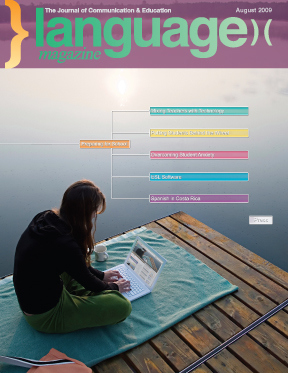
August 2009 Cover
August 2009 Cover
The confirmation hearings for Supreme Court nominee Judge Sonia Sotomayor are affording the American people an invaluable insight into the ingrained prejudices that prevail in our society, as well as the procedural anomalies that assist in their continuance.
Beneath the disturbing questioning of the validity of being a “wise Latina” and Oklahoma Senator Tom Coburn’s puerile and astonishingly inappropriate impersonation of Ricky Ricardo, informing Sotomayor that she had “some ‘splainin’ to do,” there exists an underlying concern that Sotomayor’s interrogators are oblivious to their task of determining whether or not she has the requisite intelligence and experience for the role, and would rather score points by demeaning her. On top of which, there is considerable doubt about the validity of so-called expert testimony which not only undermines these confirmation hearings, but also calls into question the opinions of the Supreme Court itself.
The criticism of the Judge’s statement that her personal experience has shaped her thinking is contrary to the fundamental principle that we should learn from our experiences, but it seems to indicate that education, intellect, and expertise count for little in politics.
These hearings, like most Washington hearings, rely heavily on “expert” testimony but the choice of these experts seems to be based on proving a point rather than a desire for the truth. For example, over the last few weeks, the Center for Equal Opportunity, a small conservative think tank opposed to affirmative action and bilingual education, has been blessed with at least two opportunities to make its voice heard in the highest chambers. Linda Chavez, its chairman, a Reagan appointee, and a political analyst for Fox News, delivered testimony in opposition to Sotomayor’s appointment, claiming that the Judge “made dubious arguments in support of bilingual education and more broadly in trying to equate English language requirements as a form of national origin discrimination.” The organization was also called in to assist the Supreme Court in its decision to side with Arizona officials who said the federal government should not be supervising the state’s spending for teaching non-English-speaking students (Horne v. Flores, see p.9). Justice Alito’s majority opinion cited an amicus brief filed by the Center: “Research on [English-Language Learner] instruction indicates there is documented, academic support for the view that [structured English immersion] is significantly more effective than bilingual education.”
Of course, everyone is entitled to their opinion — Chavez served as president of U.S. English, an English-only organization — and we all know that research and statistics can be manipulated to serve several different points of view, however a Supreme Court Justice has a duty to seek out a balance of research before coming to an opinion, and, in this case, Alito has chosen to ignore the wealth of research which suggests that bilingual education is more successful than English-only.
Our representatives should be the best and the brightest, not simply people who agree with us. We have a President who graduated magna cum laude from Harvard Law School, and deserve representatives in all sectors of government who recognize the value of research, education, and true expertise.

The confirmation hearings for Supreme Court nominee Judge Sonia Sotomayor are affording the American people an invaluable insight into the ingrained prejudices that prevail in our society, as well as the procedural anomalies that assist in their continuance.

Beneath the disturbing questioning of the validity of being a “wise Latina” and Oklahoma Senator Tom Coburn’s puerile and astonishingly inappropriate impersonation of Ricky Ricardo, informing Sotomayor that she had “some ‘splainin’ to do,” there exists an underlying concern that Sotomayor’s interrogators are oblivious to their task of determining whether or not she has the requisite intelligence and experience for the role, and would rather score points by demeaning her. On top of which, there is considerable doubt about the validity of so-called expert testimony which not only undermines these confirmation hearings, but also calls into question the opinions of the Supreme Court itself.

The criticism of the Judge’s statement that her personal experience has shaped her thinking is contrary to the fundamental principle that we should learn from our experiences, but it seems to indicate that education, intellect, and expertise count for little in politics.

These hearings, like most Washington hearings, rely heavily on “expert” testimony but the choice of these experts seems to be based on proving a point rather than a desire for the truth. For example, over the last few weeks, the Center for Equal Opportunity, a small conservative think tank opposed to affirmative action and bilingual education, has been blessed with at least two opportunities to make its voice heard in the highest chambers. Linda Chavez, its chairman, a Reagan appointee, and a political analyst for Fox News, delivered testimony in opposition to Sotomayor’s appointment, claiming that the Judge “made dubious arguments in support of bilingual education and more broadly in trying to equate English language requirements as a form of national origin discrimination.” The organization was also called in to assist the Supreme Court in its decision to side with Arizona officials who said the federal government should not be supervising the state’s spending for teaching non-English-speaking students (Horne v. Flores, see p.9). Justice Alito’s majority opinion cited an amicus brief filed by the Center: “Research on [English-Language Learner] instruction indicates there is documented, academic support for the view that [structured English immersion] is significantly more effective than bilingual education.”

Of course, everyone is entitled to their opinion — Chavez served as president of U.S. English, an English-only organization — and we all know that research and statistics can be manipulated to serve several different points of view, however a Supreme Court Justice has a duty to seek out a balance of research before coming to an opinion, and, in this case, Alito has chosen to ignore the wealth of research which suggests that bilingual education is more successful than English-only.

Our representatives should be the best and the brightest, not simply people who agree with us. We have a President who graduated magna cum laude from Harvard Law School, and deserve representatives in all sectors of government who recognize the value of research, education, and true expertise.

IN THIS ISSUE:

Putting Students Behind the Wheel
Edo Forsythe recommends collaborating with students to get the most from new technologies

The Great Divide
Lance Knowles confronts the challenge of mixing teachers with technology

Tools for Teaching English
Language Magazine’s selection of technology products for the ESL classroom

Español en la Naturaleza
Kate Sommers-Dawes finds Spanish natural in Costa Rica

Busting Student Stress
Carmen Gloria Garrido Barra offers advice  on how to reduce anxiety in the language classroom

Plus all the latest news in language learning technology, book reviews, and source information on language funding

4 Responses to “August 2009”

  1. Hi! I was surfing and found your blog post… nice! I love your blog. :) Cheers! Sandra. R.

  2. I love your site. :) Love design!!! I just came across your blog and wanted to say that I

  3. Eric Lindberg says:

    Not sure if you’re aware of this, but your subscription page has some troubles when viewed on a Mac in anything other than Internet Explorer.

  4. @Eric Lindberg, Are you sure? I just checked with Safari 4 and Firefox 3.5 (on OSX 10.6) and everything seems perfect… (or maybe was a short problem what you detected)

Leave a Reply

Banner Campaign
online edition limited time offer

Excellence and Innovation in Language Learning Act

Reps. Rush Holt (D-NJ) and Paul Tonko (D-NY) have introduced the Excellence and Innovation in Language Learning Act (HR 6036), a bill that would authorize $400 million in funding for FY 2011 for the teaching of foreign languages to K-12 students. The sponsoring Representatives hope that the bill will become part of the reauthorization of the Elementary and Secondary Education Act, or “No Child Left Behind.” Tonko spoke about his intention to introduce this bill two weeks ago at a policy briefing on language learning in the global age: “The next generation must not follow the globe, but shape it,” Tonko said, noting that foreign language instruction for young Americans is imperative to “U.S. national security and global leadership challenges.” Key elements of the bill are that it would authorize $400 million for fiscal year 2011 for programs at the national, state, and local levels, specifically: a. National activities: $100 milion to establish the U.S. Department of Education in a leadership role to coordinate a national effort to build our language capacity by supervising the adoption of standards, supporting research for best practice in teaching languages, collecting data on international benchmarks in language learning, providing scholarships for students and teachers to study abroad, and support partnerships that demonstrate high quality and effective models of language instruction. b. State Activities: $100 million to help establish a statewide coordination advisory council that would develop a comprehensive state plan for expanding language learning opportunities as well as boosting efforts to recruit and train qualified language teachers. c. Foreign Language Education Partnership Programs: $200 million for partnerships between K-12 school systems and higher education to develop model K-16 sequences of language instruction that would include appropriate assessments of language proficiency and provide scholarships for teachers and students as well as fund research on effective language teaching. Please contact your representatives to express your support for this bill.

Defense Department Funds Translation Technology

BBN Technologies, a subsidiary of defense giant Raytheon Company, has been granted 6.1 million dollars in funding for its Multilingual Automatic Document Classification, Analysis and Translation (MADCAT) program. The additional monies come from the Defense Advanced Research Projects Agency, or DARPA, which is the research and development arm for the Department of Defense. MADCAT runs on a laptop and immediately translates written text in almost any form (including handwritten notes) without the use of a translator. As Prem Natarajan, BBN's top employee in speech and language processing said in a press release, "Foreign language translation on the battlefield is slow, dangerous and expensive. The MADCAT system will help our troops understand road signs, print media and captured documents that could be of immediate importance to their safety and to the successful completion of their missions."

Hispanic Theatre Festival Honors Mexico

Taking place through August 1 in Miami, the International Hispanic Theatre Festival is celebrating both its 25th year and Mexico's contribution to Latin American culture. Mexican actor and director Maestro José “Pepe” Solé will receive a Lifetime Achievement in the Performing Arts Award. Also descending upon Miami to showcase their work are artists from Mexico, Brazil, Argentina, Uruguay, Chile, Spain and Puerto Rico. Said Mario Ernesto Sánchez, whose theater, Teatro Avante, hosts the festival; “It amazes me that it has been 25 years. It has always been a struggle for audiences, for funding, for success, for everything you dream of."

NYTimes Advocates for Educational Civil Rights

The editorial board of the New York Times has urged the White House to support the Department of Education Office for Civil Rights compliance reviews despite anticipated push back from districts. See the editorial here: http://www.nytimes.com/2010/03/16/opinion/16tue2.html?hp. More on how this will affect English Language Learners in April's issue of Language Magazine.
Join our forum!

Find Your University

USAEducationGuides.com is a fully interactive College Search Tool that provides you with a wealth of information about 5,044 two- and four-year colleges and universities in the United States. The search includes statistics, photos, online applications, and firsthand information written by current students just like you. You can search by region, state, major, and school type to find the college of your choice.